Musculoskeletal Disorders
Explore impacts on movement and quality of life


Hyaluronic acid is a naturally occurring substance found throughout the human body.1,2 As a long-chain sugar molecule (glycosaminoglycan), it interacts with water and contributes to hydration, lubrication, and structural support in tissues.1,2 It is most abundant in the skin, eyes (vitreous humour), and umbilical cord.2
For research and applied contexts, hyaluronic acid is commonly processed into its stable, water-soluble salt form, sodium hyaluronate. The terms are often used interchangeably in scientific and pharmaceutical literature.
Hyaluronic acid’s primary functions stem from its two main properties: hydration and viscoelasticity. It is a key component of the extracellular matrix and interacts with water to support tissue moisture.1
Its viscoelastic nature combines the characteristics of a viscous fluid (for lubrication) and an elastic solid (for shock absorption). This fluid-like behaviour facilitates movement at slow rates, while the elastic behaviour allows tissues to respond to faster mechanical stress.1,2
TRB works with pharmaceutical-grade, non-animal sourced hyaluronic acid selected for its high purity and consistent quality. Sourced through a highly controlled biofermentation process, this material is free from animal proteins and supports the development of reliable sodium hyaluronate-based formulations.²
Our work in this field has contributed to the development of sodium hyaluronate solutions for intra-articular injection.3-4 Research efforts focus on understanding and optimising the properties of hyaluronic acid for different therapeutic applications.
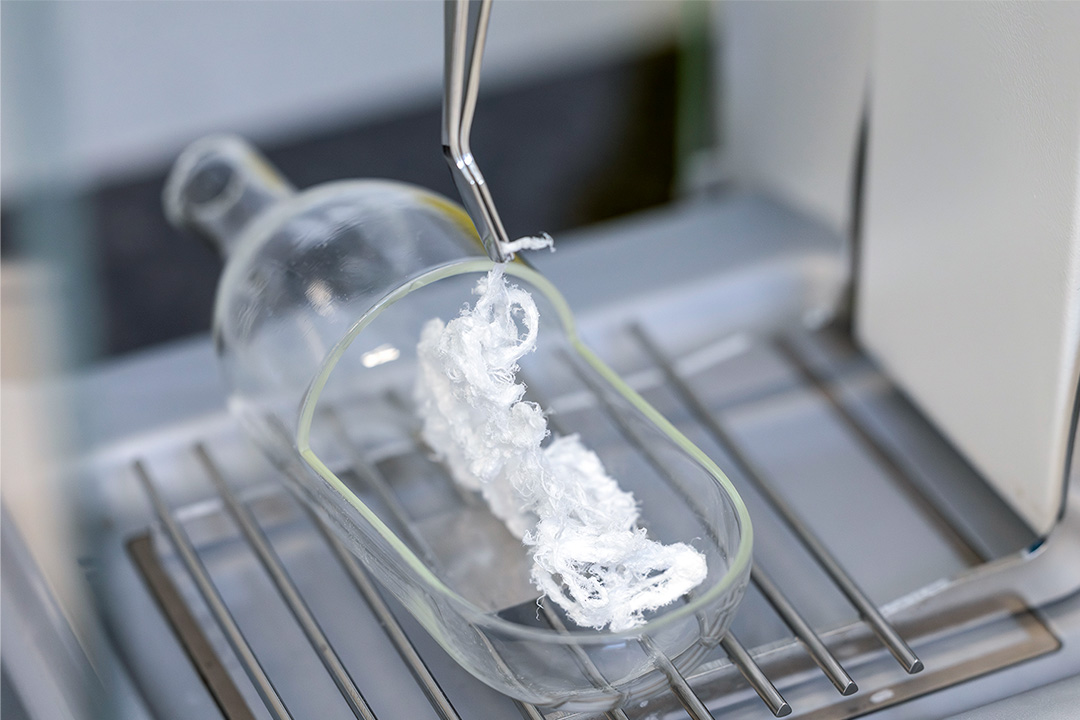
In conditions like osteoarthritis, changes in joint composition include alterations in naturally occurring hyaluronic acid and its mechanical properties.
Viscosupplementation involves the intra-articular administration of hyaluronic acid formulations, which have been studied for their physical and biochemical interactions within joint environments. Research has also explored cellular and molecular responses associated with hyaluronic acid in joint tissues.2

At the intersection of innovation and care, our integrated therapeutic approach supports patients across three vital domains










Fraser JRE, Laurent TC, Laurent UBG. Hyaluronan: its nature, distribution, functions and turnover. Journal of Internal Medicine. 1997;242:27–33.
Gupta RC, Lall R, Srivastava A and Sinha A. Hyaluronic Acid: Molecular Mechanisms and Therapeutic Trajectory. Frontiers in Veterinary Science. 2019;6:192.
Ostenil® Summary of Product Characteristics. Available at: https://trbchemedica.co.uk/blogs/ostenil-product-smpcs/ostenil-smpc. (Accessed November 2025).
Ostenil® Summary of Product Characteristics. Available at: https://trbchemedica.co.uk/blogs/ostenil-product-smpcs/ostenil-plus-smpc. (Accessed November 2025).
This website is intended for an international audience and may include information about products that are not available in all countries or may be marketed under different trademarks, indications, or dosages. The content is provided for general information only and should not be considered medical advice or a substitute for guidance from a healthcare professional. Information on this website should not be interpreted as a solicitation or promotion of any medical device or drug.