Osteoarthritis
Our experience, our expertise, your care

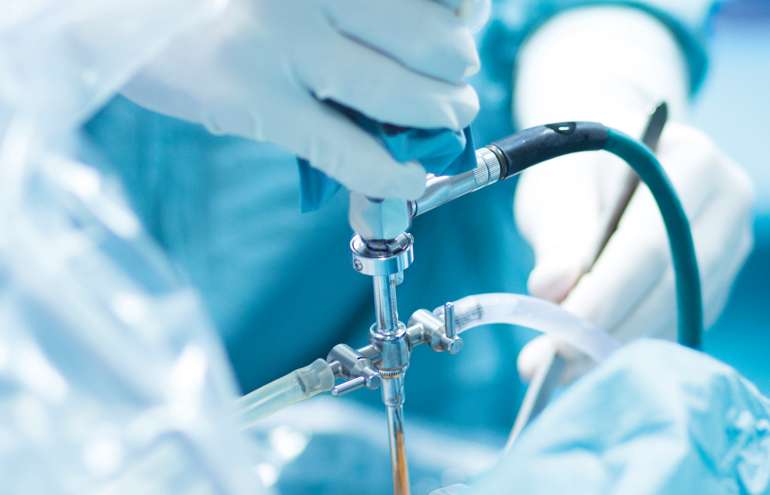
Arthroscopy is a minimally invasive surgical procedure used to diagnose and treat joint problems. It allows surgeons to see inside a joint using a small camera (arthroscope), and perform precise repairs through tiny incisions.
Because it causes less tissue damage, patients usually experience less pain and faster recovery than with traditional open surgery.¹,² Arthroscopy is commonly performed on the knee, shoulder, hip, ankle, elbow, and wrist.
Arthroscopy combines diagnostic and therapeutic precision:3
Because it’s performed under local, regional, or general anaesthesia, patients can usually return home the same day.
A healthcare professional may recommend arthroscopy if:3,4
Arthroscopy may be part of a broader treatment plan, often following or combined with non-surgical therapies such as physiotherapy or injections.3
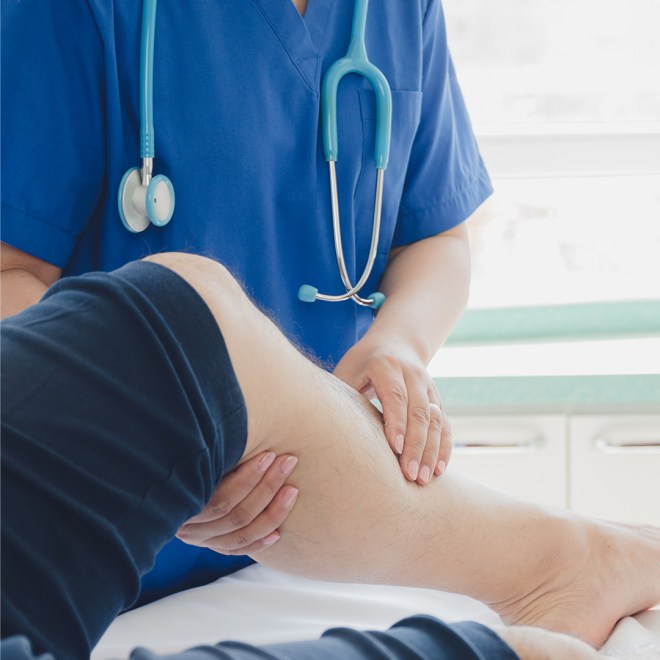
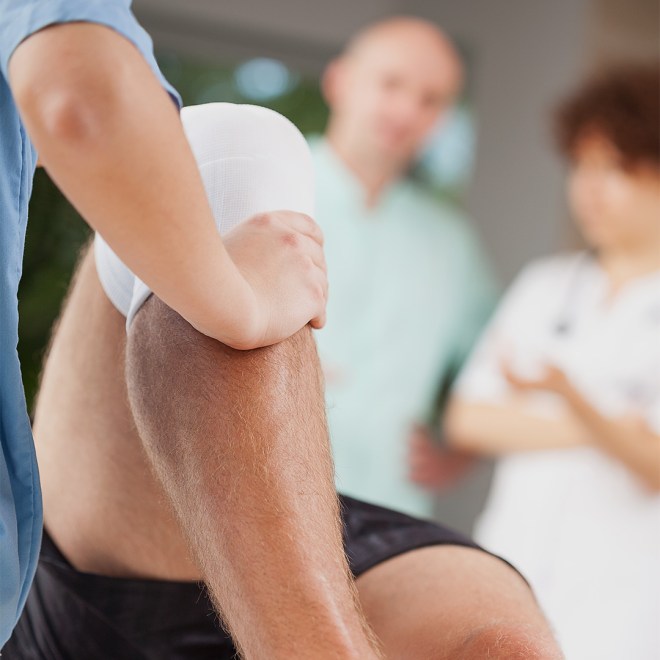
Following arthroscopy, the goal is to restore joint mobility and reduce pain. A rehabilitation plan typically includes:3
While arthroscopy generally allows for a quicker recovery compared with open surgery,1,2 complete healing may still require several weeks to months.3

Hyaluronic acid is a naturally occurring molecule essential for maintaining joint lubrication and cushioning.5-7 When administered at the end of arthroscopic procedures, it serves a mechanical function to:
Its structure mirrors the body’s own hyaluronic acid (similar concentration and molecular characteristics), ensuring it is biocompatible and suitable for use in post-procedural protocols.5

Hyaluronic acid is a naturally occurring substance found throughout the human body.
Menekse S. Comparison of Outcomes between Open and Arthroscopic Rotator Cuff Repair. Advances in Orthopedics. 2024;2024:1–7.
Vuletić F, Bøe B. Current Trends and Outcomes for Open vs. Arthroscopic Latarjet. Current reviews in musculoskeletal medicine. 2024;17:136–143.
Shoulder Arthroscopy. American Academy of Orthopaedic Surgeons. Available at: https://orthoinfo.aaos.org/en/treatment/shoulder-arthroscopy/. Accessed November 2025.
Why it’s done – Arthroscopy. NHS. Available at: https://www.nhs.uk/tests-and-treatments/arthroscopy/why-its-done/. Accessed November 2025.
Mathies B. Effects of Viscoseal, a synovial fluid substitute, on recovery after arthroscopic partial meniscectomy and joint lavage. Knee Surg Sports Traumatol Arthrosc Off J ESSKA. 2006;14(1):32–39.
Dong Z, Huang L, Wu G, et al.. Efficacy and safety of arthroscopic surgery combined with hyaluronic acid for meniscal injuries: A systematic review and meta-analysis of randomized controlled studies. Journal of orthopaedic surgery, 2023;31(1):1–9.
Chau JY, Chan W, Woo S, et al. Hyaluronic Acid Instillation following Arthroscopic Anterior Cruciate Ligament Reconstruction: A Double-Blinded, Randomised Controlled Study. J Orthop Surg. 2012;20(2):162–165.
Hempfling H. Intra-articular hyaluronic acid after knee arthroscopy: a two-year study. Knee Surg Sports Traumatol Arthrosc Off J ESSKA. 2007;15(5):537–546.
TRB Chemedica. Viscoseal IFU. Available at: http://trbchemedica.de/mediathek/viscoseal-syringe-beipackzettel-ifu/ (accessed December 2025).
This website is intended for an international audience and may include information about products that are not available in all countries or may be marketed under different trademarks, indications, or dosages. The content is provided for general information only and should not be considered medical advice or a substitute for guidance from a healthcare professional. Information on this website should not be interpreted as a solicitation or promotion of any medical device or drug.