


Sports medicine
Overuse Injuries and recovery


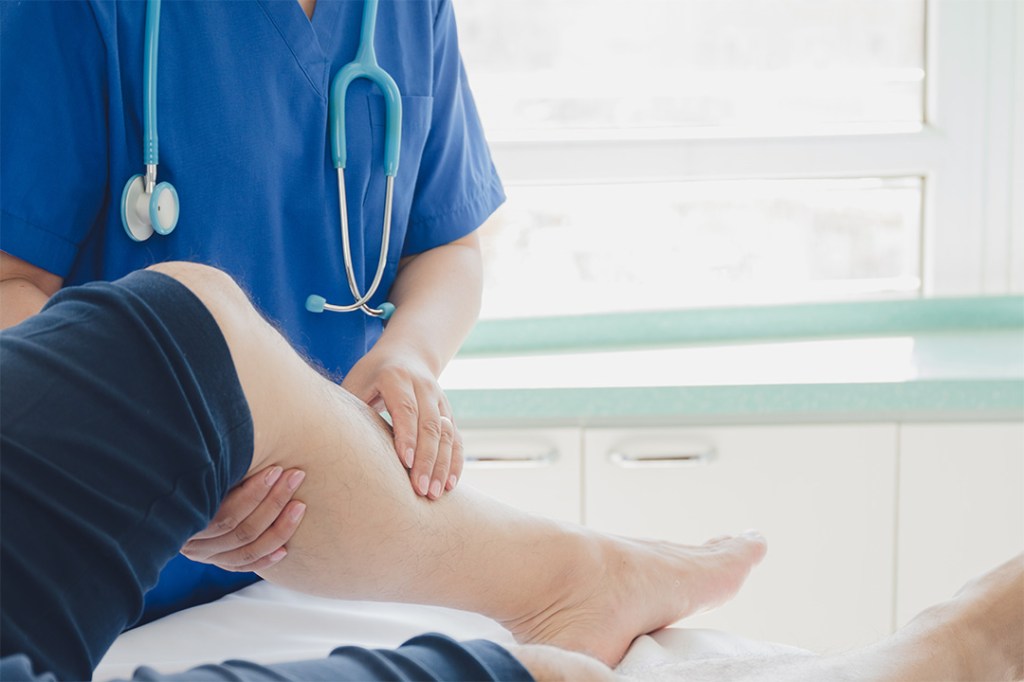
Jumper’s knee, also known as patellar tendinopathy, is an overuse injury affecting the tendon that connects the kneecap (patella) to the shinbone (tibia).1–3 It is one of the most frequent causes of anterior knee pain, accounting for around 10% of clinical knee diagnoses.4
Accumulated repetitive mechanical stress from activities like jumping and landing places tensile loads on the collagen fibres within the tendon and can cause an overuse injury.1,4 There is also evidence that patellar tendinopathy may be a degenerative condition.¹
The condition is particularly common among athletes whose sports involve frequent jumping, landing, or rapid changes in direction.1,3,4 Incidence rates have been reported as 32% in elite basketball players and 45% in elite volleyball players.4
Prevalence among recreational jumping athletes has been reported at approximately 14%.1,3

The patellar tendon transfers forces from the quadriceps muscle, but repetitive mechanical stress from activities like jumping and landing can cause an overuse injury. This accumulated stress places tensile loads on the collagen fibres within the tendon.1,4 Over time, this can lead to:
Current evidence suggests that patellar tendinopathy may be a degenerative condition.1 Histopathological studies typically show structural degenerative changes rather than an acute inflammatory response; classic inflammatory cells are often absent.1,4,5
Patellar tendinopathy typically presents as:
Symptoms usually have a gradual onset and can become a chronic condition that persists for months or even years.3–5

You should consult a healthcare professional if:
A clinician can provide a clinical diagnosis through a detailed history and physical examination.1,3 Imaging, such as ultrasound, may be used in conjunction with the exam to identify pathology, assess the tendon’s structure, and rule out other differential diagnoses.3,4

Management focuses on reducing tendon load, restoring function, and promoting tendon healing.1,4,5
Since launching its first hyaluronic acid-based products in 1998, TRB has been a pioneer in the clinical application of hyaluronic acid, with a key focus on musculoskeletal disorders like tendinopathy.
Hyaluronic acid is a fundamental component of the extracellular matrix within tendons, where it contributes significantly to their viscoelastic and water-binding (hygroscopic) properties.6
When applied to the area surrounding the tendon, it acts to support the tissue environment through several mechanisms:6
Maintaining hydration: Its high capacity for water retention (hygroscopicity) helps maintain the fluid balance within the tendon structure
Discover more about hyaluronic acid – the naturally occurring molecule behind our tendon and joint care solutions.
Santana JA, Mabrouk A, Sherman AL. (2023). Jumpers Knee. In: StatPearls [Internet]. StatPearls Publishing
Llombart R, Mariscal G, Barrios C, Llombart-Ais R. The Best Current Research on Patellar Tendinopathy: A Review of Published Meta-Analyses. Sports. 2024;12(2):46.
Rudavsky A, Cook J. (2014). Physiotherapy management of patellar tendinopathy (jumper’s knee). Journal of Physiotherapy, 2014;60:122–129.
Rosen AB, Wellsandt E, Nicola M, Tao MA. Clinical Management of Patellar Tendinopathy. Journal of Athletic Training. 2022;57(7):621–631.
Breda SJ, Oei EHG, Zwerver J, et al. Effectiveness of progressive tendon-loading exercise therapy in patients with patellar tendinopathy: a randomised clinical trial.
Oliva F, Marsilio E, Asparago G, et al. The Impact of Hyaluronic Acid on Tendon Physiology and Its Clinical Application in Tendinopathies. Cells. 2021;10(11):3081.
Ostenil® Tendon IFU. Available at: https://www.trbchemedica.de/mediathek/ostenil-tendon-beipackzettel-ifu-mdr/ (accessed December 2025).
This website is intended for an international audience and may include information about products that are not available in all countries or may be marketed under different trademarks, indications, or dosages. The content is provided for general information only and should not be considered medical advice or a substitute for guidance from a healthcare professional. Information on this website should not be interpreted as a solicitation or promotion of any medical device or drug.