


Sports medicine
overuse Injuries and recovery

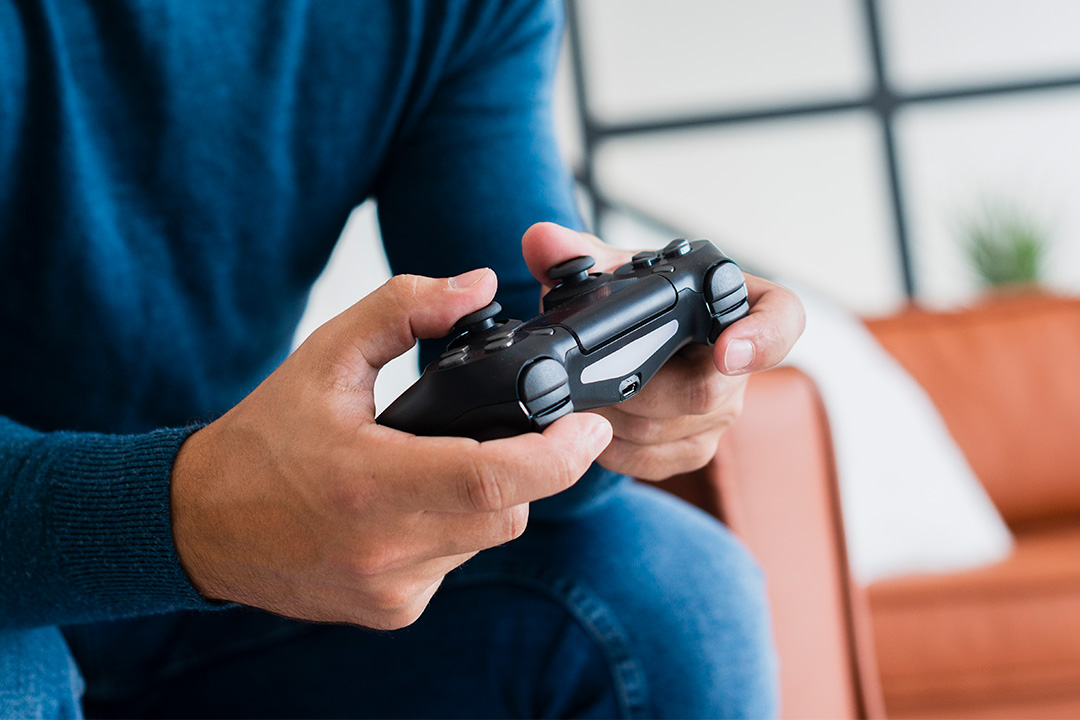
Medically known as De Quervain’s tenosynovitis, this is a common repetitive-strain condition affecting the tendons on the thumb side of the wrist.1,2
While the condition typically affects adults aged 40–50, it is increasingly recognised among people who spend long periods using gaming controllers, smartphones, or handheld devices.3–5
Repetitive thumb movements – such as scrolling, tapping, or gripping – place continuous stress on the wrist tendons.2 Over time, this cumulative strain can lead to the pain, swelling, and limited mobility that define the condition.2,6
Healthy abductor pollicis longus (APL) and extensor pollicis brevis (EPB) tendons glide smoothly within a lubricated tunnel, called the first dorsal compartment.7 With repetitive thumb or wrist use, this glide can become restricted. Research has shown that:
These changes can make everyday thumb movements uncomfortable, particularly during gaming, typing, or texting.
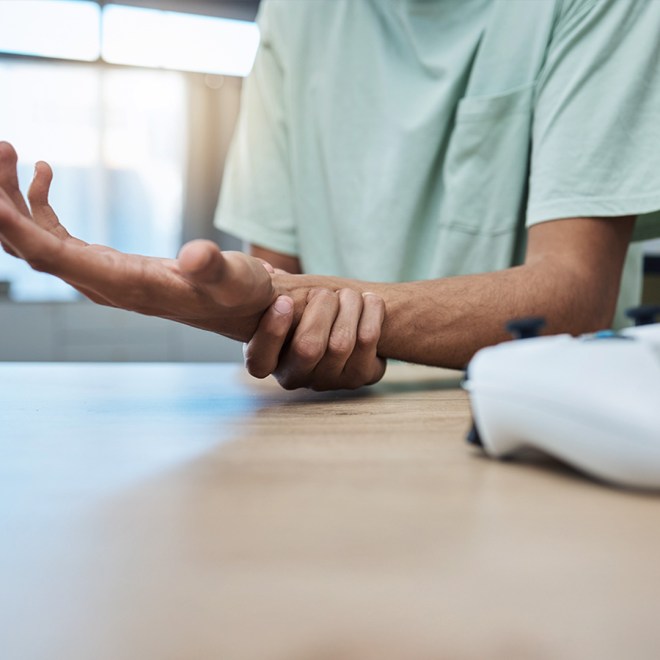
De Quervain’s tenosynovitis results from repetitive mechanical stress and local inflammation. Common contributors include:


Symptoms of De Quervain’s tenosynovitis may develop gradually.5,9 Common signs include:
Treatment aims to relieve pain, reduce inflammation, and restore tendon mobility.1,8,9
Conservative approaches
Medication and injections
Most patients recover with conservative management; surgery is considered only for severe or persistent cases.1,5

For over 25 years, TRB has advanced the use of hyaluronic acid in musculoskeletal care.

When applied around the affected tendons, hyaluronic acid creates a physiological environment that supports recovery:1,11,12

Orlandi D, Corazza A, Silvestri E, et al. Ultrasound-guided percutaneous injection to treat De Quervain’s disease. Eur Radiol. 2015;25(5):1512-1519.
Ali M, Rathore FA, Newby N. Association between SMS texting and De Quervain’s tenosynovitis. J Ayub Med Coll Abbottabad. 2014;26(4):624-627.
Yaghmour KM, Ozpembe ME, Edwards DS. The impact of handheld devices on the wrist and thumb: a systematic review. Eur J Orthop Surg Traumatol. 2025;35:312.
Walkinshaw E. Thumbs up and down. CMAJ. 2011;183(11):E711-E712.
OrthoInfo. De Quervain’s tenosynovitis. Available at: https://orthoinfo.aaos.org/en/diseases–conditions/de-quervains-tendinosis (accessed December 2025).
Ramchandani J, Thakker A, Tharmaraja T. Time to reconsider occupation-induced De Quervain’s tenosynovitis: An updated review of risk factors. Orthop Rev. 2022;14(3):38-45.
American Society for Surgery of the Hand. Gamer’s/Texter’s Thumb: What Is It? 2025. Available at: https://www.assh.org/handcare/condition/gamers-texters-thumb (accessed November 2025).
Satteson E, Tannan SC. De Quervain Tenosynovitis. In: StatPearls [Internet]. Treasure Island (FL): StatPearls Publishing; 2025.
Walker-Bone K, Palmer KT, Reading I, Cooper C. Prevalence and impact of musculoskeletal disorders of the upper limb in the general population. Arthritis Rheum. 2004;51(4):642-651.
NHS. Thumb pain. Available at: https://www.nhs.uk/symptoms/hand-pain/thumb-pain/ (accessed November 2025).
Kaux JF, Samson A, Crielaard JM. Hyaluronic acid and tendon lesions. Muscles Ligaments Tendons J. 2016;5(4):264-269.
Ostenil® Tendon IFU. Available at: https://www.trbchemedica.de/mediathek/ostenil-tendon-beipackzettel-ifu-mdr/ (accessed December 2025).
This website is intended for an international audience and may include information about products that are not available in all countries or may be marketed under different trademarks, indications, or dosages. The content is provided for general information only and should not be considered medical advice or a substitute for guidance from a healthcare professional. Information on this website should not be interpreted as a solicitation or promotion of any medical device or drug.